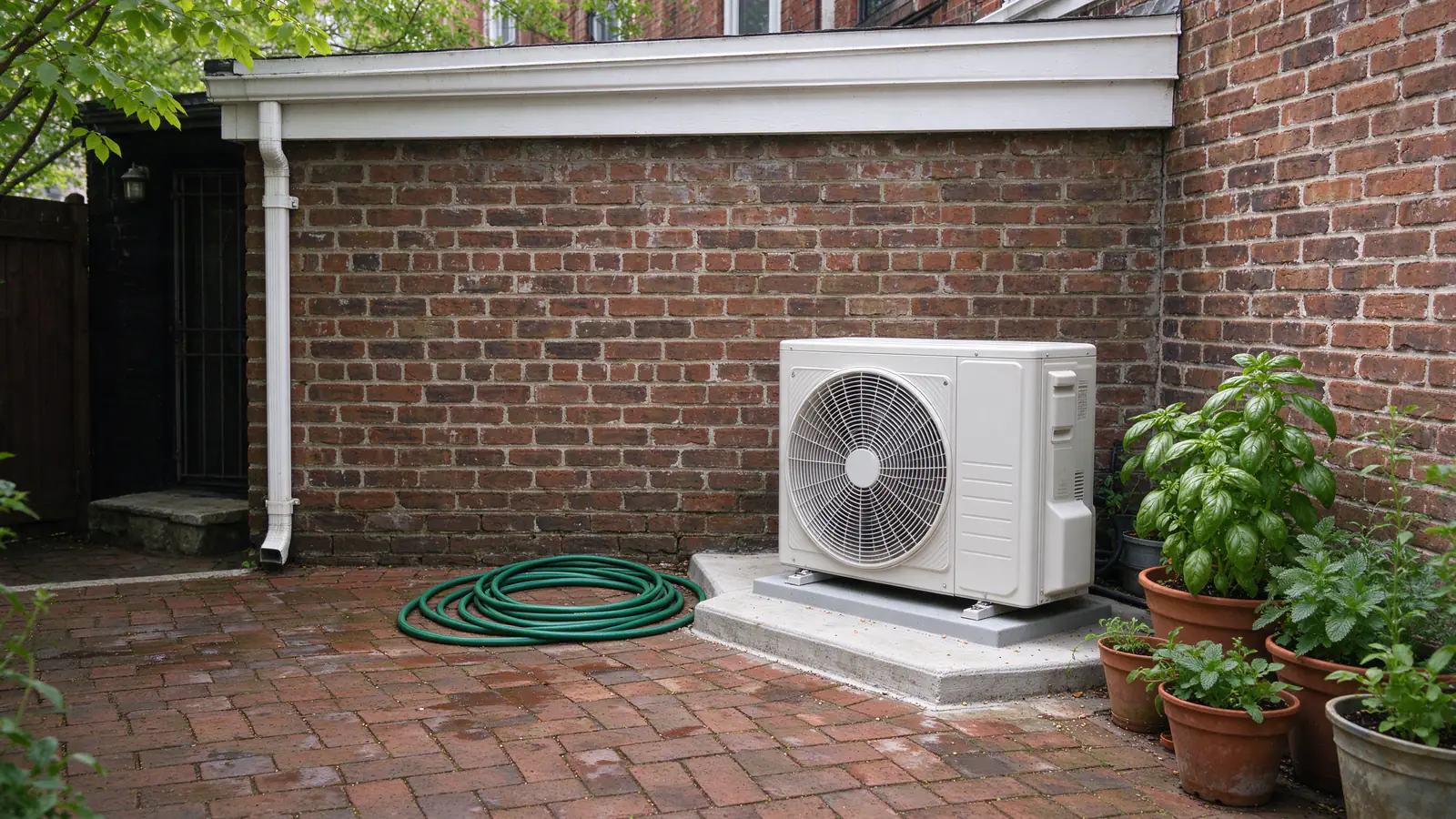
A mini split that sat idle or ran on heat all winter needs a few minutes of attention before July. Roomwise DC Mini Splits put this spring routine together for DC homes, where the first hot week can arrive in May and the humid months make the drain work hardest.
Start with the filters
Wash the filters in every indoor head first. A clogged filter cuts airflow, which makes the head work harder and can let the coil get cold enough to ice.
Most wall heads open from the front. Lift the panel, slide the mesh filters out, and:
- Rinse them under lukewarm water from the clean side, so dust washes out rather than in.
- Let them dry fully in the shade; a damp filter grows mold.
- Slide them back until they click, and close the panel.
If your manual lists a second, finer filter behind the mesh, check its replacement schedule too. Filters are the one job on this list worth repeating every few weeks through summer.
Clear around the outdoor unit
The outdoor unit needs open air to shed heat. After a DC winter it may be ringed with leaves, a drift of mulch, or patio furniture stacked against it.
- Clear a foot or two on every side, and more above the fan if something hangs over it.
- Pull leaves out of the coil by hand, from the outside, with the power off at the disconnect.
- Rinse gently with a garden hose if the coil looks dusty. Never use a pressure washer.
- Check the pad or bracket. The unit should sit level and firm. A tilt or a loose bracket bolt is worth a service call.
On a rear-wall bracket, look up as well as around: a vine or a gutter overflow can foul the top of the unit.
Check the condensate drain
Every head pulls water out of the air in cooling mode, and in DC’s humid summer that’s a lot of water. July dew points at Reagan National average about 66°F, high enough to keep a drain busy all season.
Find where your drain line ends, usually outside near the outdoor unit or at a pump. Then:
- Run cooling for 20 minutes and confirm water drips from the end of the line.
- If a head has a condensate pump, listen for it cycling on and off.
- Look for algae or slime at the drain’s outlet, a sign it’s starting to clog.
A drain that clogs mid-July shows up as water running down the wall under a head. If you already see that, read why a mini split leaks water. The condensate drain guide explains how drains and pumps are set up.
Run a cooling test on a mild day
Test cooling before you need it. DC averages about 40 days a year at or above 90°F, and a weak system is easier to sort out in April than during the first heat wave.
What to look for
- Cold air within a few minutes from each head, noticeably cooler than the room
- Steady operation without the outdoor unit starting and stopping every few minutes
- No musty smell when the fan starts, which points to mold on the blower wheel
- No frost on the lines at the outdoor unit, which can mean low refrigerant or poor airflow
If anything looks off, don’t keep running it. A refrigerant problem is a leak to find and fix, not a top-up. See mini split repair for how diagnosis works.
Use dry mode on sticky days
Many DC summer days are humid rather than hot. Dry mode runs the head slowly to pull moisture out without overcooling the room, which suits a basement or a bedroom at night.
Read the dehumidification guide for when dry mode helps and when cooling mode does the job better. Running a head at a steady setting, rather than switching it off and on, also keeps your summer bills down; the operating cost guide has the numbers.
When to book a service visit
Some jobs need a technician’s tools: cleaning the blower wheel, checking refrigerant pressures, and testing electrical connections. Book a visit if your system:
- Smells musty even with clean filters
- Drips, gurgles or leaves water stains
- Cools weakly or ices up
- Hasn’t been serviced in the past two years
The mini split maintenance page covers what a visit includes. For a head with heavy mold, a deep cleaning with the blower wheel removed may be the better fix.