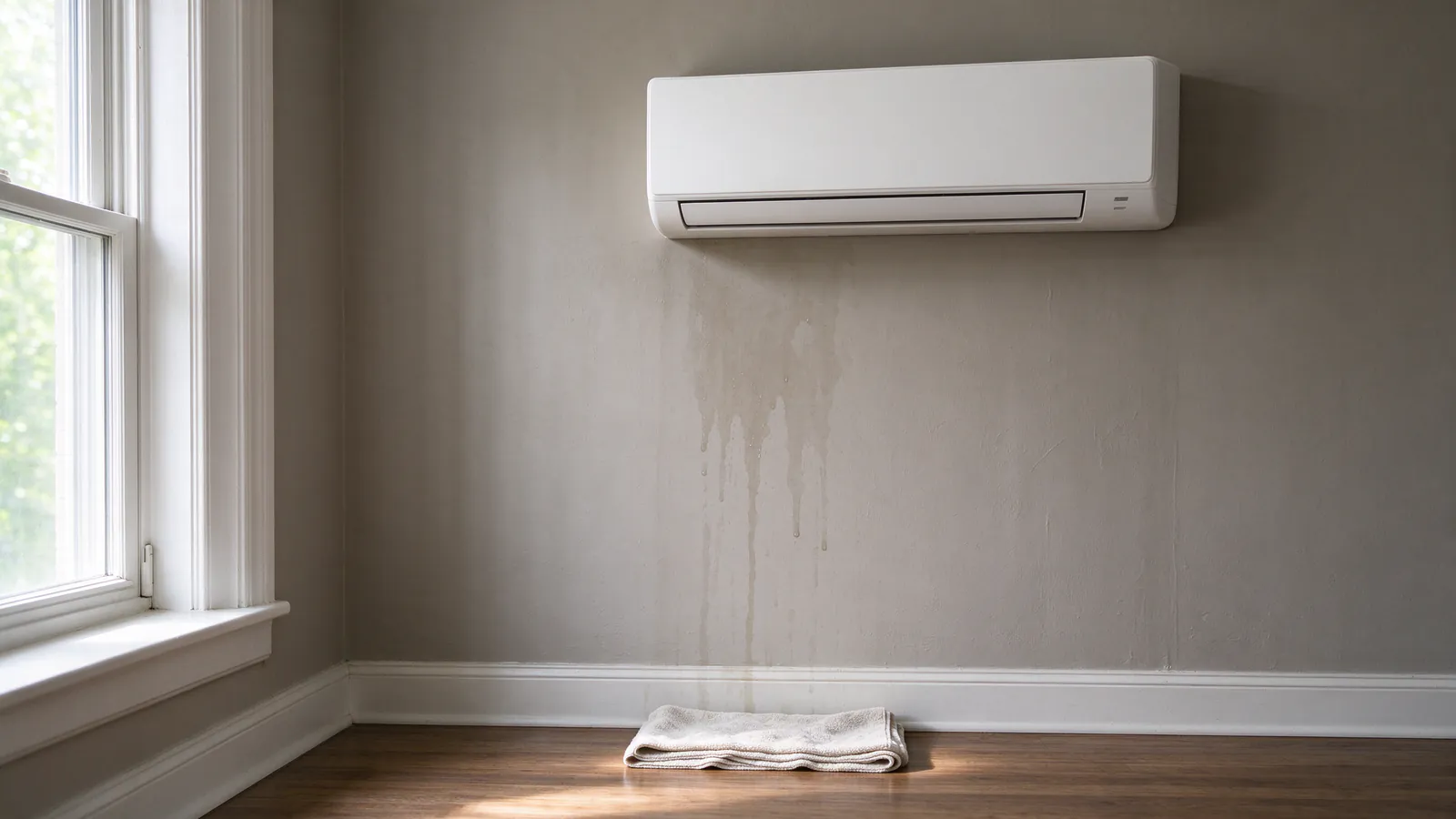
Water dripping from a mini split head looks alarming, but the cause is usually simple: the water the unit makes isn’t reaching its drain. Roomwise DC Mini Splits diagnoses and fixes leaking heads through our repair service. This guide helps you narrow down the cause and decide what to do now.
Is a leaking mini split dangerous?
It can damage plaster, floors and the head’s own electronics if it keeps going. Turn cooling off, catch the water, and keep it away from outlets.
A dripping head isn’t a refrigerant hazard; the refrigerant is sealed in the copper lines, and what drips is plain water. The concern is where the water goes.
Where is the water coming from?
Where the water appears is the best clue to why. No single sign proves one cause, so treat this as a starting point.
| Where you see water | Likely causes | What to check first |
|---|---|---|
| Dripping from the bottom or front of the head | Blocked drain, dirty pan, ice melting off the coil | Filters, and ice on the coil behind them |
| Running down the wall under the head | Drain hose loose or cracked behind the head, head tilted back | Whether the head sits level |
| A stain on a wall or ceiling away from the head | Drain or line set inside the wall, an overflowing pump | Where the lines run, and whether a pump is beeping |
| Under the outdoor unit | Defrost meltwater or sweating lines, usually normal | Nothing, unless it ices a walkway |
What causes a mini split to leak water?
Work through these causes in order. The first three are the most likely.
A blocked drain line
Dust that gets past the filter feeds a slimy film in the warm, wet drain. Over time it narrows the line until water backs up into the pan and spills over the front. Insects or mud at the outside end can block it too.
Dirty filters and a frozen coil
Clogged filters starve the coil of air, so it runs colder than it should and ices over. When the unit cycles off, the ice melts faster than the pan can drain it. A coil that freezes with clean filters points to low refrigerant.
A failed condensate pump
Heads in basements, on inside walls and in ceilings often rely on a small pump. If it fails, its safety switch should stop cooling; if the switch fails or isn’t wired, water overflows instead.
A head that isn’t level
A head tilted back, even slightly, sends water to the wrong end of the pan, away from the drain outlet and down the wall behind. A bracket that has shifted on plaster can cause this; the installation process guide shows how a head should be mounted.
A sag or rise in the drain line
A drain needs a steady downhill fall. A low spot holds water and slime; a high spot makes water climb. Either one slows the drain until it can’t keep up on a humid day. Where the head sits decides the route; see the placement guide.
Sweating lines
Refrigerant lines with gaps in their insulation sweat in a humid wall cavity or behind the head. The water looks like a drain leak but comes from the lines themselves.
A drain that was never right
If a head has leaked since it was installed, the drain path itself may be wrong. The condensate drain guide shows how a drain should run.
What can I check myself?
A few things, safely, with the unit off. Don’t open the head’s casing, poke into the coil, or pour cleaners into the drain.
- Switch off cooling and set the remote to off.
- Check the filters. Lift the front panel, slide them out, and rinse them if they’re grey.
- Look for ice on the coil behind the filters. If there is some, leave the unit off or on fan only until it melts.
- Check the head is level with a small level on top, or by eye against a door frame.
- Find the drain’s outside end and make sure it’s open, not buried, crushed or iced.
- Listen for a pump alarm if the head has a pump; some beep or flash a code when the reservoir is full.
When should I call for a repair?
Call when the leak keeps coming back after the filters are clean, or when you see any of these:
- Water inside a wall or coming through a ceiling
- Ice on the coil with clean filters
- An error code or a beeping pump
- Weak cooling along with the leak
- A head that has dripped since it was installed
What does a leak repair cost?
Your price comes from the diagnostic visit and what it finds. Roomwise’s typical diagnostic visit for a mini split is $100 to $250, credited toward the repair if you go ahead.
| Repair | Roomwise’s typical range |
|---|---|
| Clearing a blocked condensate drain | $100 to $300 |
| Replacing a condensate pump | $200 to $500 |
| Deep cleaning, blower wheel out, coil and pan cleaned (per head) | $250 to $450 |
| Finding and fixing a refrigerant leak, then recharging | $300 to $1,500 and up |
Roomwise’s typical range for a mini-split repair is $250 to $1,500 overall. Releveling a head or reconnecting a drain hose falls within it, depending on what’s behind the head.
How do I keep it from happening again?
Keep air and water moving. Repeat leaks come from the same few places: dirty filters, a slimed drain or a pump nobody checks.
- Rinse the filters every few weeks in the cooling season.
- Book a yearly cleaning with the drain flushed; see maintenance.
- Use dry mode sensibly on muggy days; the dehumidification guide explains why heads make so much water in DC.
If the drain itself is the problem, a re-route or a new pump is the lasting fix. On an older system that leaks and cools poorly, compare the repair with replacement.
In winter, check the outdoor unit’s meltwater path too; the winter guide covers defrost. For heads that need a pump, the indoor unit types guide explains which ones and why.