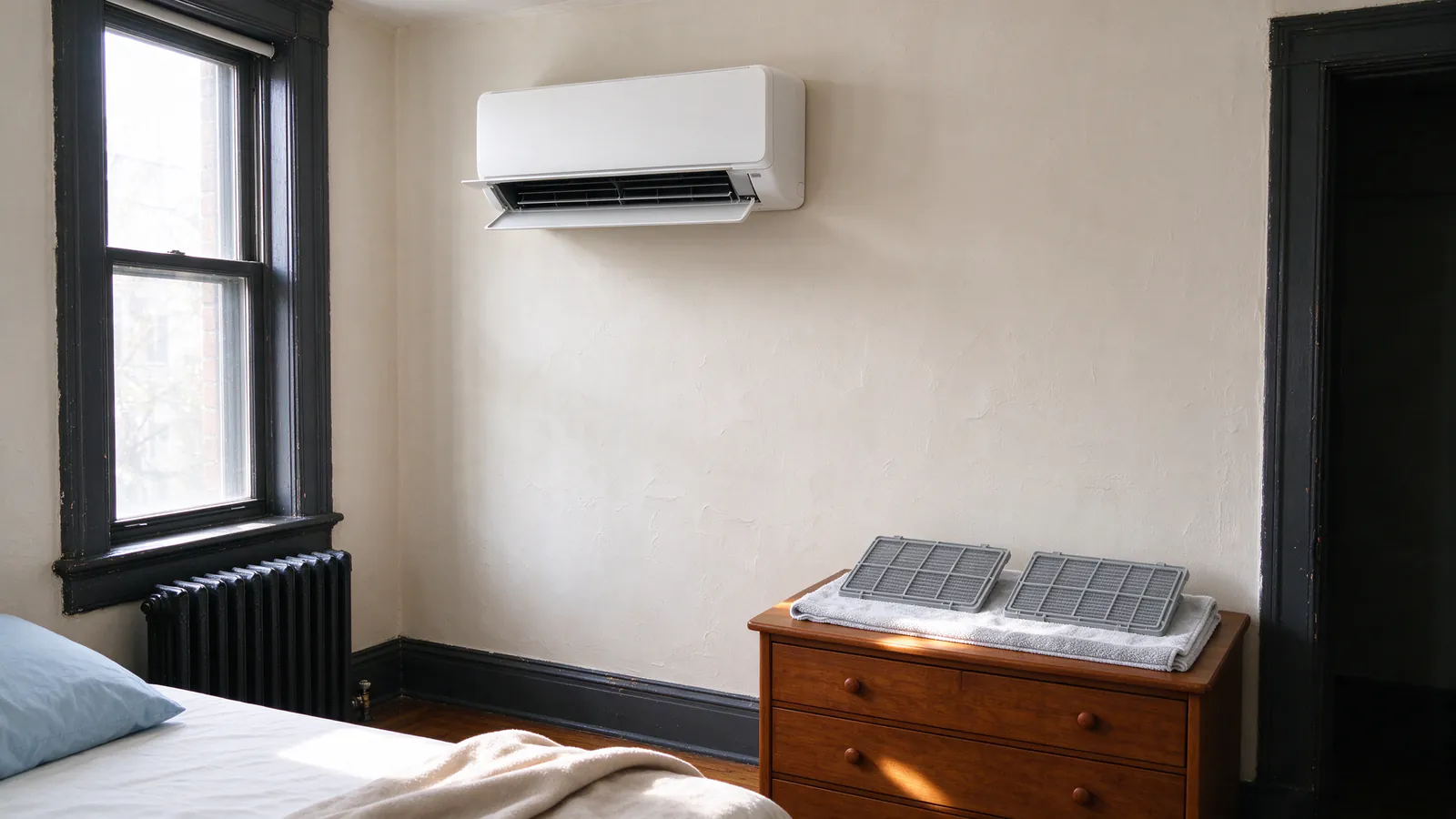
Roomwise DC Mini Splits maintains and cleans ductless mini splits in DC homes. A mini split has no ducts to hide dirt in, but every head holds a filter, a coil, a blower wheel and a drain pan that collect whatever is in the room’s air.
Left alone, that shows up as a musty smell, weak airflow or water running down the wall. A yearly visit and clean filters keep it from getting that far.
What you can do yourself
Filters and the outdoor unit are yours. Washing the filters every few weeks in season does more for a mini split than anything else you can do between visits.
Washing the filters
- Turn the unit off at the remote.
- Lift the front panel and slide the mesh filters out.
- Vacuum them, or rinse them in lukewarm water, and let them dry in the shade.
- Slide them back in before you run the unit. Without filters, dust goes straight onto the coil.
Outside
- Keep plants, fences and stored things back from the outdoor unit as far as its manual asks.
- Clear leaves from the coil and the base in fall; street trees drop them right into rear yards.
- After a snowstorm, clear the snow off and around the unit so the coil can breathe and defrost water can drain. DC averages 13.7 inches of snow a year, most of it from December to February.
- Never shovel snow against it, and never wrap it in a full cover.
Leave these to a visit
The blower wheel, the coil fins, the electrical connections and the refrigerant circuit. Bent fins, a cracked drain pan or a wet board cost more than the visit you skipped, so book one instead.
What a service visit covers
A service visit checks the whole system once a year, indoors and out, and cleans what can be cleaned without taking the head apart.
- Indoors: filters washed, the coil and blower wheel inspected with a light, the face of the coil cleaned, louvers and the remote checked.
- The drain: the pan and line flushed, the slope checked, and any condensate pump run with its overflow switch tested.
- Outdoors: the coil rinsed, the base cleared, the stand or bracket checked for movement, and the line set insulation looked at for sun and weather damage.
- Electrical: connections at the disconnect and the units checked for heat or looseness.
- Running checks: pressures and temperatures read in the season’s mode, against what the manufacturer expects.
Anything that needs more than cleaning goes in a written note with a price, and becomes a repair only if you approve it. A visit that finds nothing wrong is a good visit.
When a head needs a deep cleaning
Shine a flashlight into the air outlet. If the blower wheel’s blades are dark with buildup, a filter wash and a surface clean won’t reach it; the wheel has to come out.
DC summers make this more likely. July dew points at Reagan National average about 66°F, so the coil runs wet for months, and the wheel and pan stay damp long enough to grow things. The dehumidification guide explains where that water comes from.
Signs it’s time
- A musty or sour smell for the first few minutes after startup
- Black specks on the louver or the wall below the head
- Airflow that’s weaker than it was, with clean filters
- Water spitting from the outlet instead of draining
What the deep cleaning involves
We protect the wall and floor, take the covers off, and remove the blower wheel where the model allows it. The wheel gets washed, the coil and drain pan are cleaned through, and the drain is flushed. Then everything goes back together and runs in both modes before we leave.
Some heads open more easily than others, and a few have to come off the wall to free the wheel. The service visit tells you which kind you have before you book a deep cleaning.
When to book it
Book the visit before the season that works the system hardest for your house. Spring suits a house that leans on the mini split for cooling, since Reagan National averages 40 days a year at 90°F or above.
| When | What it catches |
|---|---|
| Spring, before cooling | A drain that clogged over winter, a dirty coil, a pump that stopped |
| Fall, before heating | Leaves in the outdoor coil, damaged insulation, a stand that has shifted |
| After a big storm | Snow or debris blocking the outdoor unit |
| When you move in | An unknown history: last service, filter condition, any codes |
If the mini split is your main heat, a fall visit before the first freeze makes more sense. The winter guide covers what the system does on the coldest nights.
Drains and pumps
Every head makes water when it cools. The drain carries it outside or to a pump, and when that path clogs, the water comes out the front of the head and down the wall.
- Gravity drains need steady fall all the way to the outside. Algae and dust build up at the low spots.
- Condensate pumps have a small reservoir and a float. Both get cleaned, and the float gets tested so the safety switch still stops the head before an overflow.
- Exterior ends get checked for a crushed tube, ice or a wasp nest.
The condensate guide explains each drain type, and the leaking water guide sorts out what to do if it’s already dripping.
What maintenance costs
Roomwise’s typical range for a mini-split service visit is $150 to $400 for a one-head system: filters, coils, drain, electrical and refrigerant checks. Each additional indoor head on the same visit typically adds $50 to $125.
Roomwise’s typical range for a deep cleaning, with the blower wheel removed and washed and the coil and drain pan cleaned, is $250 to $450 per indoor head. Your price is set from the number and type of heads, and confirmed in writing before the work.
What a clean system gives back
- Airflow. A clean wheel and coil move the air the unit was sized for.
- Running cost. A dirty coil makes the compressor work harder for the same comfort; the operating cost guide shows what each kilowatt-hour costs on a Pepco bill.
- Fewer surprise calls. Drains and pumps fail slowly, and a visit sees it coming.
- Records. Each visit leaves a written note, worth keeping if your warranty terms ask for proof of maintenance.
On a multi-zone system, every head gets the same attention, including the one in the guest room nobody uses. If a system is old and needs more than cleaning every year, the replacement page explains when replacing it is the better spend.