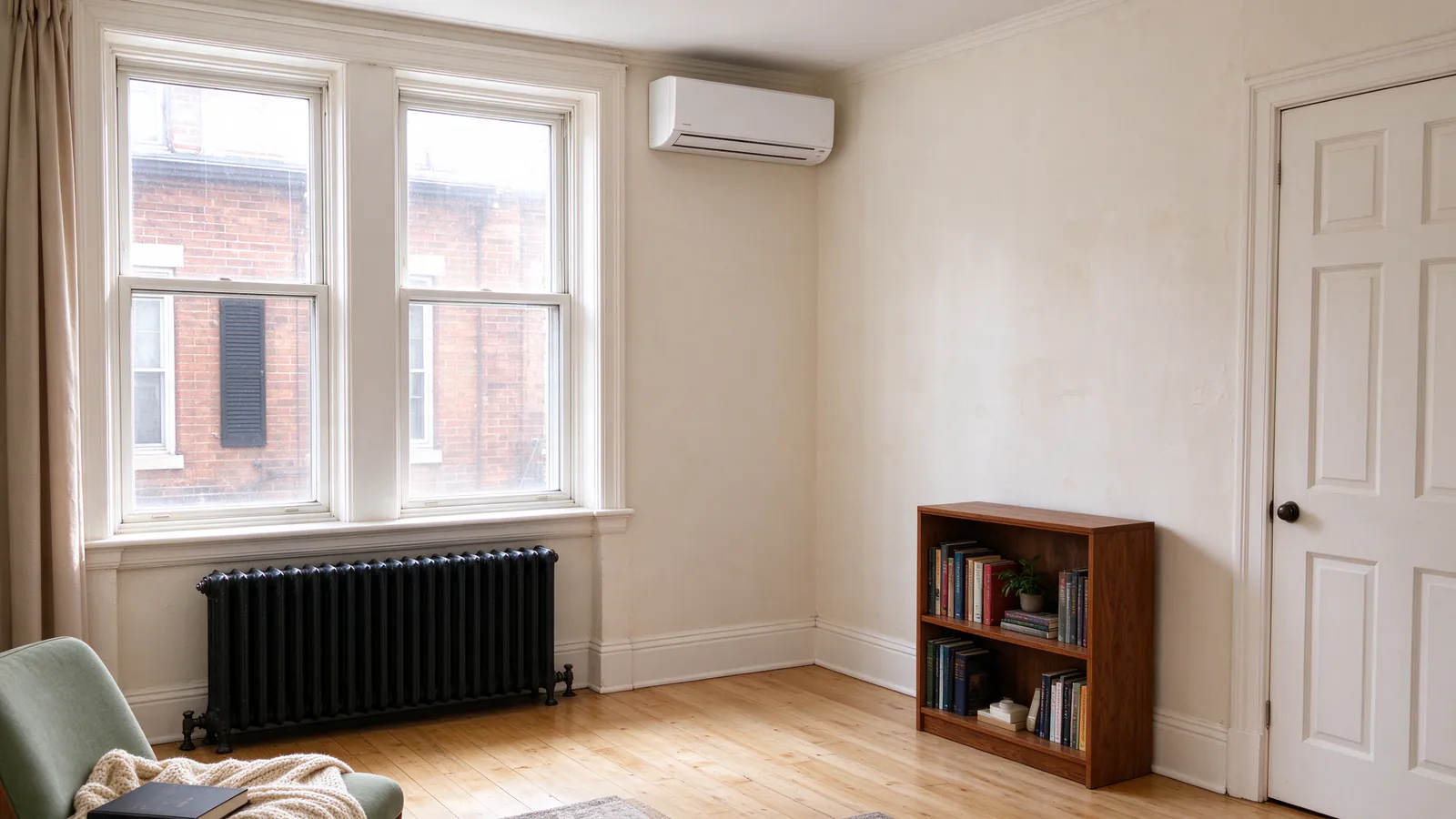
Roomwise DC Mini Splits installs single-zone mini splits for the one room in a DC house that never holds its temperature: the top floor that bakes in July, the back bedroom past the end of the radiator run, the basement office, the addition with no ducts at all.
A single-zone system is one outdoor unit and one indoor head, joined by a refrigerant line set, a drain and a control cable. It heats and cools. Nothing else in the house changes.
When one head is the right answer
Pick a single zone when the problem lives in one room or one open area. If two or three rooms are uncomfortable, a multi-zone system or two single zones usually serves them better.
Good fits for one head:
- A top-floor bedroom under a flat rowhouse roof
- A rear addition or sunroom the boiler never reached
- A finished basement or a home office
- A room that still runs a window unit every summer
- A condo room where the building allows one outdoor unit; see condo installs
One head should not try to cool rooms behind closed doors. Air from a wall head travels through open space, not around corners.
How we size it
Size comes from a heat-load calculation for the room, not from a rule of thumb per square foot. Too big, and the unit cycles on and off and leaves the room clammy. Too small, and it runs flat out on the hottest afternoons.
What goes into the number
- The design days. The District designs to 21°F for heating and 92°F for cooling.
- Windows and the roof. A top floor under a flat roof can need far more cooling than a middle floor of the same size.
- Walls. Brick party walls hold heat into the evening.
- Use. A kitchen or a home office with equipment adds load.
Summer humidity matters too. July dew points at Reagan National average about 66°F, so an inverter unit that runs long and slow pulls more moisture than one that blasts and shuts off. More on this in the sizing guide.
Where the head and the outdoor unit go
We place the head where its air reaches the whole room without blowing on the bed or the desk. On plaster walls that is usually high on an inside wall, with the line set leaving through the outside wall behind it.
The outdoor unit goes where the line run is short and the unit can breathe:
- Rear yard or patio, on a pad or a raised stand
- A bracket on the rear wall, when the yard is small
- The roof, for a top-floor room with no good wall below
In a historic district, a unit on the street side needs review, and front yards are often public space. DC’s noise rule caps mechanical equipment at 60 dB(A) at the property line, which matters when the neighbor’s window is a few feet away. Placement options are covered in the placement guide.
What a single-zone install costs
Roomwise’s typical range for a standard single-zone install is $3,000 to $6,000. That covers one room, a short line run and a panel with room for the new circuit.
Roomwise’s typical range for a complex single-zone job is $11,000 to $28,500. Complex means historic district or roof review, a long line run through finished rooms, or a new circuit and panel work.
What moves the price
- The length and route of the line set, through brick or plaster
- Whether the panel has space for a new circuit
- A roof or wall bracket instead of a ground pad
- A condensate pump where the drain can’t fall to the outside
- The head type: wall, floor console or ceiling cassette
Your price comes from the site visit and arrives as a written estimate. The DC cost guide walks through each driver.
The install itself
Most single-zone installs take a day once the permit is in hand. Work runs in this order:
- Mount the head’s wall plate and drill the line hole through the outside wall.
- Set the outdoor unit on its pad, stand or bracket.
- Run the line set, drain and control cable, then cover them.
- Pressure-test the lines with nitrogen and pull a deep vacuum.
- Release the refrigerant, start the system and check heating and cooling.
The pressure test and vacuum are where installs succeed or fail. A small leak at a flare joint can take months to show up as a system that stops cooling.
Permits, rebates and paperwork
Every install gets a DC Department of Buildings mechanical permit. On a historic property, the permit also goes through Historic Preservation Office review before it is issued. The permit steps are in the DC permit guide.
DCSEU currently offers rebates on ENERGY STAR certified ductless heat pumps, with larger amounts when a system replaces gas heat. The rebate needs the DOB permit and the equipment paperwork, so we keep those with your file. Current amounts are in the rebates guide.
After it’s running
A mini split asks little of you, but it does ask. Rinse the filters every few weeks in season, and book a professional cleaning about once a year.
Signs it needs attention
- Water dripping from the head. Usually a blocked drain or a pump that has stopped.
- A musty smell when it starts. The coil or the blower wheel needs cleaning.
- Weak cooling on a hot afternoon. Dirty filters first; a refrigerant leak if clean filters don’t help.
Our maintenance visits cover the cleaning, and repairs start with a diagnostic visit.
Why the plan comes before the price
A single-zone job looks simple, and that’s why the plan matters. The head spot, the hole, the line route and the outdoor unit’s spot all depend on each other.
We put all four in the written plan before any work starts, with the price. If the yard is too tight, the wall is a party wall or the panel is full, you know before the first hole is drilled.