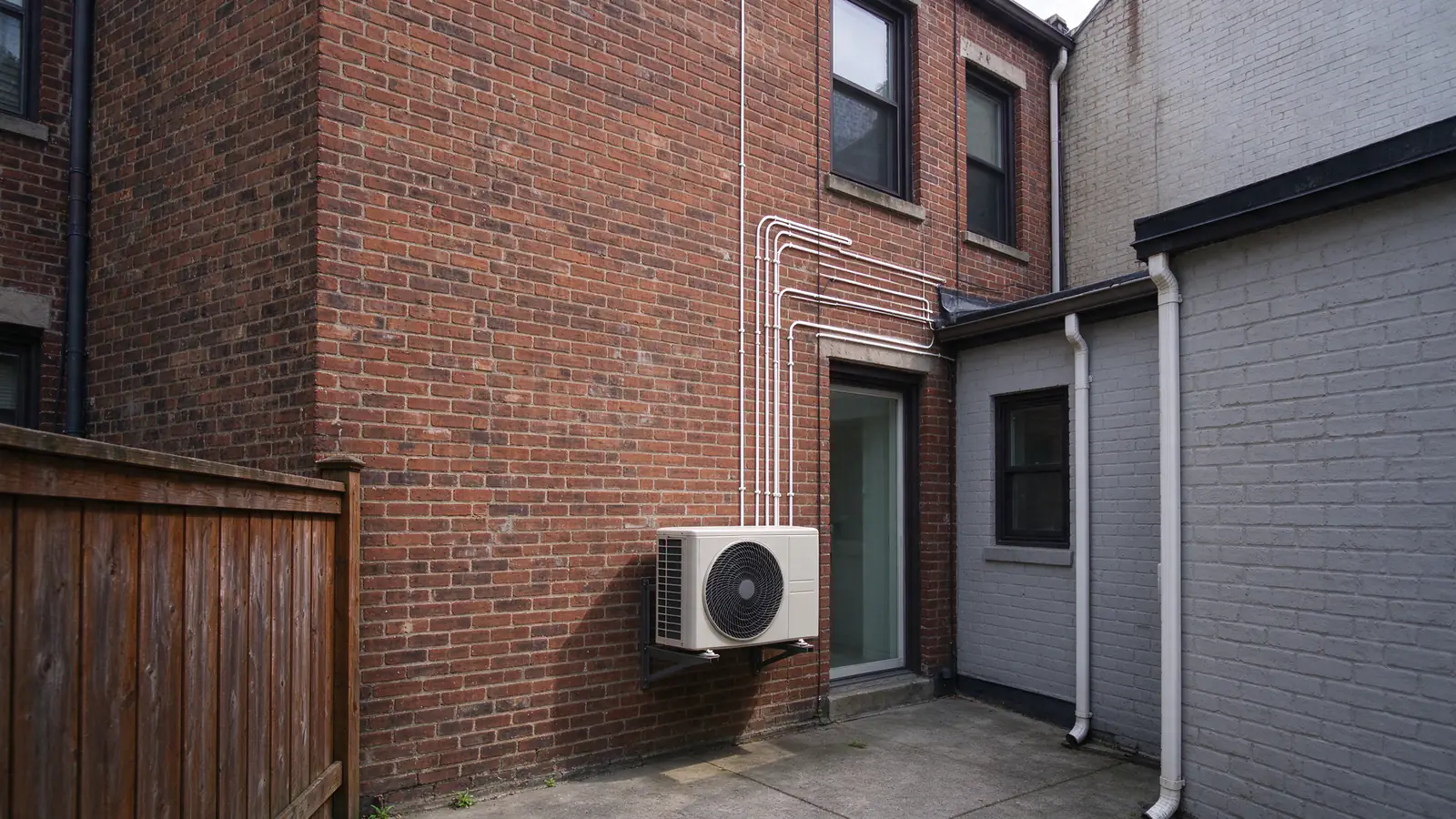
Once you know how many rooms need a head, the next question is how to connect them. Roomwise DC Mini Splits prices both paths in the written plan when both are workable, and this guide shows you how to weigh them.
The short version
One outdoor unit per room is a single-zone system; one outdoor unit for several rooms is a multi-zone system. Separate systems give independence and a closer fit. A multi-zone system gives you fewer units outside.
Everything else follows from those two facts. The rest of this guide is about which one matters more in your house.
Side by side
The table compares two single-zone systems with one two-head multi-zone system serving the same two rooms.
| Two single-zone systems | One multi-zone system | |
|---|---|---|
| Outdoor units | Two | One |
| Line runs | One from each head to its own unit | One from each head to the shared unit |
| If the outdoor unit fails | One room loses heat and cooling | Both rooms lose heat and cooling |
| Fit to small rooms | Close, since each unit matches one room | Harder; small heads share a large compressor |
| Heating and cooling at once | Yes, each runs its own mode | Most run one mode for every head |
| Electrical | A circuit for each outdoor unit | One circuit |
| Adding a room later | Add another system | Only if the unit has a spare connection and capacity |
When separate single zones win
Separate systems make sense when the rooms don’t behave alike. Each outdoor unit only answers to its own room, so nothing gets compromised.
Signs separate systems suit you
- The rooms are on far-apart floors, like a basement office and a top-floor bedroom, so one shared route would cross the whole house.
- One room has a much bigger load, such as a sun-baked top floor next to a shaded middle room.
- A room is small and needs little, where a single small unit can slow right down.
- One room matters more than the rest, like a nursery or a home office, and you don’t want it tied to anything else.
A single-zone outdoor unit with one head is also the simplest system to diagnose and service. See single-zone installation.
When one multi-zone system wins
A multi-zone system wins when outdoor space is the constraint. In DC, that constraint is real on many lots.
Signs a multi-zone suits you
- The rear yard is a few feet deep, or shared with trash bins and bikes.
- The house is in a historic district, where each unit has to stay out of street view.
- You live in a condo where the board allows one outdoor unit per home; see condo installs.
- The rooms are close together on one or two floors, with similar exposure.
One outdoor unit also means one spot to clear, one set of line covers on the wall and one unit to keep clear of leaves and snow. The multi-zone installation page explains how we match heads to it.
Are multi-zone systems less efficient?
At full load, the two are close. The difference shows on mild days, when a multi-zone outdoor unit may run a single small head and can’t slow down as far as that head needs.
Efficiency ratings for a multi-zone system apply to a specific combination of outdoor unit and heads, not to the outdoor unit alone.
The operating cost guide covers running costs in more depth.
Mixing the two
You don’t have to pick one approach for the whole house. A sensible plan uses a multi-zone system for rooms that behave alike and a single zone for the odd one out.
For example, in a three-story row house:
- A multi-zone outdoor unit on the rear wall serves the second-floor bedrooms.
- A single-zone unit on the roof serves the top floor, with its short line drop.
- The parlor floor keeps its existing heat, or gets a head later.
This keeps line runs short and each unit matched to its rooms. The placement guide covers where each outdoor unit can sit.
How the cost compares
Roomwise’s typical range for a standard single-zone install is $3,000 to $6,000. Roomwise’s typical range for a standard multi-zone install with two to four heads is $5,000 to $14,000.
Two separate systems carry two outdoor units, two circuits and two line routes, so they often cost more than one multi-zone system for the same rooms. They also leave each room independent. Your price for each option comes from the site visit and a written estimate; the DC cost guide explains what moves it.
Questions that settle it
Answer these and the choice is usually clear:
- Is there room outside for more than one unit, out of street view?
- Are the rooms on the same floor, or spread over the house?
- Does one room need far more cooling than the others?
- How much would it matter if every room lost heat on the same night?
Still undecided? The zones guide helps settle the head count first, and our assessment tool gives a starting recommendation.