“Heat pump” covers more than one kind of system, which makes this comparison confusing. Roomwise DC Mini Splits plans ductless and ducted mini splits, and this guide sorts out the three systems people mean so you can match one to your house.
Three systems, one way of moving heat
A heat pump moves heat with refrigerant: out of the house in summer, into it in winter. Ductless mini splits, ducted mini splits and central heat pumps all do this. They differ in how air gets to the rooms.
| Ductless mini split | Ducted mini split | Central ducted heat pump | |
|---|---|---|---|
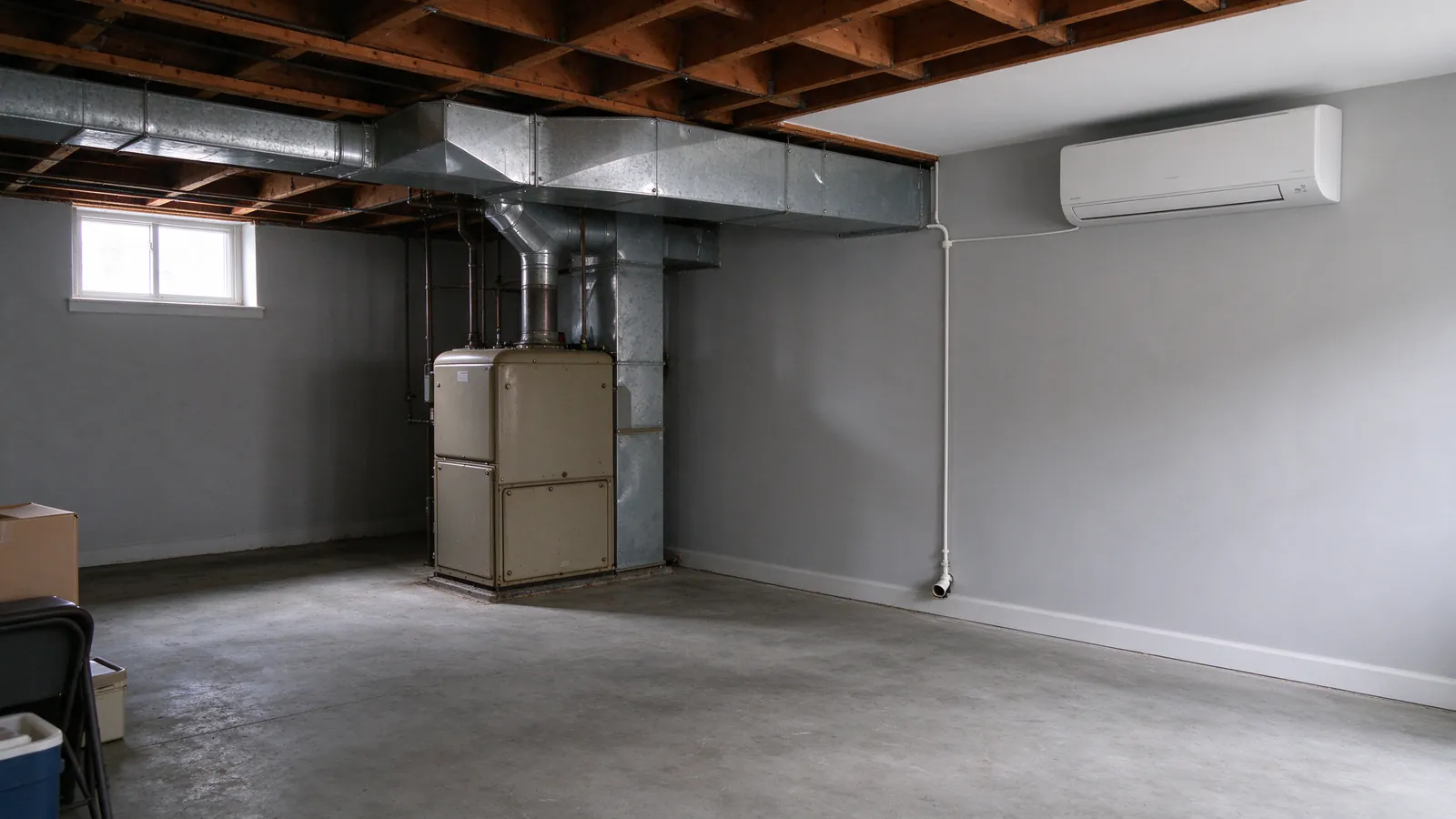
| Indoor equipment | A head in each room or zone | A small air handler hidden in a closet, attic or ceiling | A full-size air handler, often in a basement or closet |
| Ducts | None | Short runs to a few nearby rooms | A full duct system to every room |
| What you see | The head | A grille in each room | Registers and a return |
| Room control | Each head on its own | Each air handler is one zone | One zone unless dampers are added |
| Best fit | Radiator houses, single rooms | Top floors with an attic, basements, small bedrooms | Houses with good ducts already |
If your house already has ducts
A house with a furnace and ducts is set up for a central heat pump. Furnaces are the most common main heat in DC, so many houses start here.
Before reusing the ducts, check three things:
- Size. Heat pumps move more air at a milder temperature than many furnaces, and small ducts can be noisy or short of air.
- Leaks and location. Ducts in an unconditioned attic or crawlspace lose heat and cooling before it reaches the rooms.
- Reach. Basement-fed ducts often run weak by the top floor.
If the ducts pass, a central heat pump on them is usually the simplest whole-house answer. If they miss a floor, a mini split can cover that floor; see the central air guide for that pairing.
If your house heats with radiators
A radiator house has nothing to connect a central heat pump to. Building ducts through plaster, brick and finished ceilings is the costly part, not the heat pump itself.
About one DC home in five heats with a steam or hot-water boiler. In those houses, ductless heads are the practical default. The old houses guide covers the whole range of options, so this guide doesn’t repeat them.
The middle path: a ducted mini split
A ducted mini split uses a slim air handler and short ducts to serve a few rooms from a hidden spot. It gives you grilles instead of heads, without a full duct system.
Where it fits in a DC house
- Under a pitched roof or in a knee wall, serving two or three top-floor bedrooms
- In a basement ceiling, serving the basement or the rooms just above
- In a hall closet, feeding small bedrooms too small for their own heads
The trade-offs: the closet or attic gives up space, the filter needs an access panel, and all rooms on the unit share one setting. The ducted mini split installation page explains the work, and the indoor unit types guide compares it with wall, floor and ceiling heads.
Winter heat with each system
All three are sized to the same DC heating design temperature, 21°F. What differs is the backup when the outdoor air drops below that.
Backup options
- Central heat pump: electric strips in the air handler, or the old furnace kept as a dual-fuel backup
- Mini splits in a radiator house: the boiler kept on standby for the coldest nights
- All-electric mini split plan: heads sized to carry the design day, with the winter output checked against each room’s load
The winter performance guide explains how output falls as it gets colder.
Rebates and running cost
DCSEU’s current program lists rebates for ductless mini-split heat pumps at two efficiency tiers, with larger amounts when the system replaces gas heat. Check DCSEU’s current form for its terms on ducted equipment.
The amounts, rules and paperwork are covered in the DC rebates guide. On running cost, the leaks in old ducts can matter more than the equipment’s rating; well-sealed ducts or no ducts at all keep more of the heat you pay for.
What it costs
Roomwise’s typical range for a standard single-zone install is $3,000 to $6,000, and for a standard multi-zone install with two to four heads, $5,000 to $14,000. A ducted mini split falls in these ranges or above, depending on the duct work and access.
For a central heat pump on existing ducts, the price turns on the duct condition, the air handler’s spot and the panel. The DC cost guide lists our complex ranges too.
How to decide
Start with what the house already has:
- Sound ducts to every room: a central heat pump is the natural fit.
- Ducts that miss a floor: keep them for the rest, add a mini split for that floor.
- Radiators, no ducts: ductless heads, with a ducted mini split wherever an attic, closet or basement can hide one.
- Small bedrooms in a row: a ducted mini split often serves them better than a head in each.
The assessment tool asks about your heat and rooms and suggests where to start.